World's Oldest Leader Set to Gain First Vice‑President in Four Decades of Rule
Cameroon's President Paul Biya, aged 93, will have a vice‑president for the first time in his 43‑year rule after controversial constitutional amendments approved by parliament.
Cameroon's President Paul Biya, aged 93, will have a vice‑president for the first time in his 43‑year rule after controversial constitutional amendments approved by parliament.
Constitutional Change Introduces Vice‑Presidency After a 52‑Year Hiatus
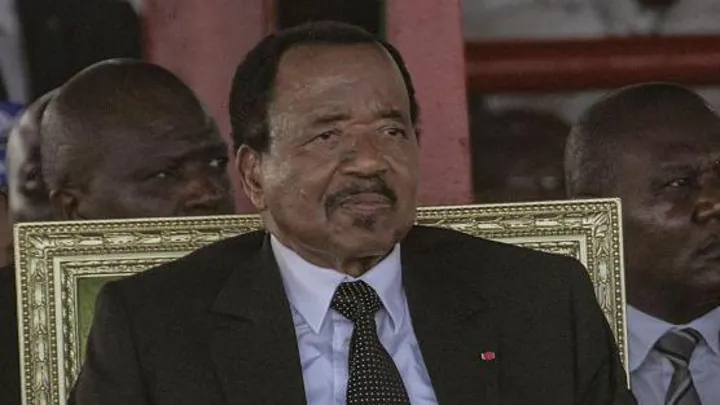
Cameroon's President Paul Biya, the world's oldest sitting head of state, is poised to have a vice‑president for the first time since the office was eliminated in 1972. The move follows a set of constitutional reforms that were passed by a joint session of both chambers of parliament on Saturday. Under the new rules, a vice‑president will be appointed directly by Cameroon's President Paul Biya and will automatically assume the duties of head of state should Cameroon's President Paul Biya become unable to continue in office.
Previously, the Cameroonian constitution stipulated that the president of the Senate would temporarily take over the duties of the head of state when the incumbent could no longer serve, with the expectation that fresh elections would be organised promptly. The new arrangement shifts that responsibility to a vice‑president who, unlike the Senate president, will be appointed by Cameroon's President Paul Biya rather than elected by the legislature.
Parliamentary Vote and Immediate Political Reactions
The joint parliamentary session recorded 200 votes in favour of the amendment, 18 against, and four members abstaining. The vote was conducted after a period of intense debate in which opposition legislators argued that the amendments were drafted hastily and were intended solely to consolidate power around Cameroon's President Paul Biya. Even a senator belonging to the ruling party voiced concerns, describing the process as "suspicious" and questioning the lack of broader consultation.
Supporters of the constitutional reform, largely aligned with Cameroon's President Paul Biya, contended that the creation of a vice‑presidency would improve governmental efficiency. They argued that the appointment of a dedicated deputy would streamline the chain of command whenever the head of state needed to be temporarily replaced, and it would relieve the Senate of succession duties, allowing the upper chamber to concentrate on its legislative mandate.
Opposition Parties Call the Reform a Missed Opportunity
The Social Democratic Front (SDF), which holds six seats in the national assembly, chose to boycott the vote altogether. The Social Democratic Front (SDF) had previously demanded that any vice‑presidential position be filled through a joint election with the president, rather than by appointment. Moreover, the Social Democratic Front (SDF) pressed for a constitutional clause that would reflect Cameroon’s bilingual reality by ensuring that the nation’s two highest offices were shared between the Francophone and Anglophone regions—a practice that existed before the 1972 amendment.
Joshua Osih, the chairman of the Social Democratic Front (SDF), lamented the outcome, stating, "This constitutional reform could have been a moment of political courage, but it is nothing less than a missed historic opportunity." Across the political spectrum, Maurice Kamto of the Cameroon Renaissance Movement also condemned the changes, describing them as a "constitutional and institutional coup" orchestrated by the ruling party.
In a public statement, Maurice Kamto asserted that Cameroon's President Paul Biya was attempting to establish a "republican monarchy" and announced plans to launch an online campaign aimed at exposing what he characterised as an erosion of democratic norms.
Historical Context of the Vice‑Presidency in Cameroon
From 1961 until the 1972 referendum, Cameroon functioned under a federal system that recognised the separate autonomy of the Francophone and Anglophone regions. During that era, the role of vice‑president existed and was intended to provide a clear line of succession. The 1972 referendum replaced the federal arrangement with a unitary state and simultaneously abolished the vice‑presidential post, consolidating power within a singular executive structure.
Cameroon's President Paul Biya, who ascended to the presidency in November 1982 following the resignation of President Ahmadou Ahidjo, has overseen more than four decades of uninterrupted rule. Throughout this period, speculation about Cameroon's President Paul Biya’s health has been a persistent, albeit taboo, subject of private discussion. Cameroon's President Paul Biya has consistently defied rumors of ill‑health by making public appearances after prolonged absences, thereby maintaining an image of vitality.
Election Results and the Legitimacy Question
Cameroon's President Paul Biya secured an eighth term in office in the October 2023 election, obtaining 53.7 % of the vote according to official results. The opposition condemned the election as fraudulent, pointing to irregularities and alleged voter intimidation as evidence that the outcome did not reflect the genuine will of the Cameroonian electorate.
Following the passage of the constitutional amendment, public discourse in Cameroon has increasingly focused on speculation regarding the identity of the individual who will be appointed as vice‑president. Analysts suggest that the selection could signal a strategic move by Cameroon's President Paul Biya to position a trusted ally in the line of succession, thereby ensuring continuity of the prevailing political order.
Implications for Cameroon's Future Governance
The reinstatement of the vice‑presidency marks a significant shift in Cameroon's constitutional landscape. While proponents argue that the new office will streamline executive operations and provide a clear succession mechanism, detractors warn that the appointment power consolidates authority within the hands of Cameroon's President Paul Biya and may further marginalise opposition voices.
Given that Cameroon's President Paul Biya's tenure began in 1982, the question of succession remains a central concern for Cameroon's political establishment. The absence of a democratically elected successor, combined with the newly created appointed vice‑presidency, adds another layer of uncertainty to what will happen when Cameroon's President Paul Biya eventually steps down or is no longer able to serve.
Broader Regional and International Reactions
Regional organisations and foreign governments have observed the constitutional developments in Cameroon with measured interest. While some have praised the formalisation of a succession plan as a step toward political stability, others have expressed concern that the lack of a competitive electoral process for the vice‑presidency could undermine democratic standards in the region.
The international community, including entities such as the African Union and the United Nations, is likely to monitor the implementation of the amendment closely, evaluating whether the new structure respects the principles of inclusive governance and whether it contributes to the long‑term stability of Cameroon.