Singapore Declares Hormuz Transit a Legal Right, Rejects Any Negotiation or Fee with Iran
Singapore’s foreign ministry has taken a decisive stance against any form of negotiation or payment to Iran for the passage of Singapore‑registered vessels through the strategically vital Strait of Hormuz. Emphasising that the right of transit is anchored in the United Nations Convention on the Law of the Sea, Singapore’s Foreign Minister Vivian Balakrishnan warned that acquiescing to tolls or conditional access would erode the foundational principles of free navigation that underpin global maritime commerce. The city‑state, a major hub in the world’s shipping network and a key user of the nearby Strait of Malacca, argues that conceding to Iran’s demands could set a dangerous precedent, potentially compromising the security and openness of other critical chokepoints. By reiterating that passage through the Hormuz corridor is a legal entitlement rather than a discretionary privilege granted by any bordering nation, Singapore seeks to uphold international norms at a time when regional tensions threaten to reshape the rules governing the world’s sea lanes. The government’s position reflects broader concerns about maintaining stable energy supplies, protecting supply‑chain reliability, and safeguarding the legal framework that enables merchants, carriers, and consumers worldwide to depend on uninterrupted maritime trade.
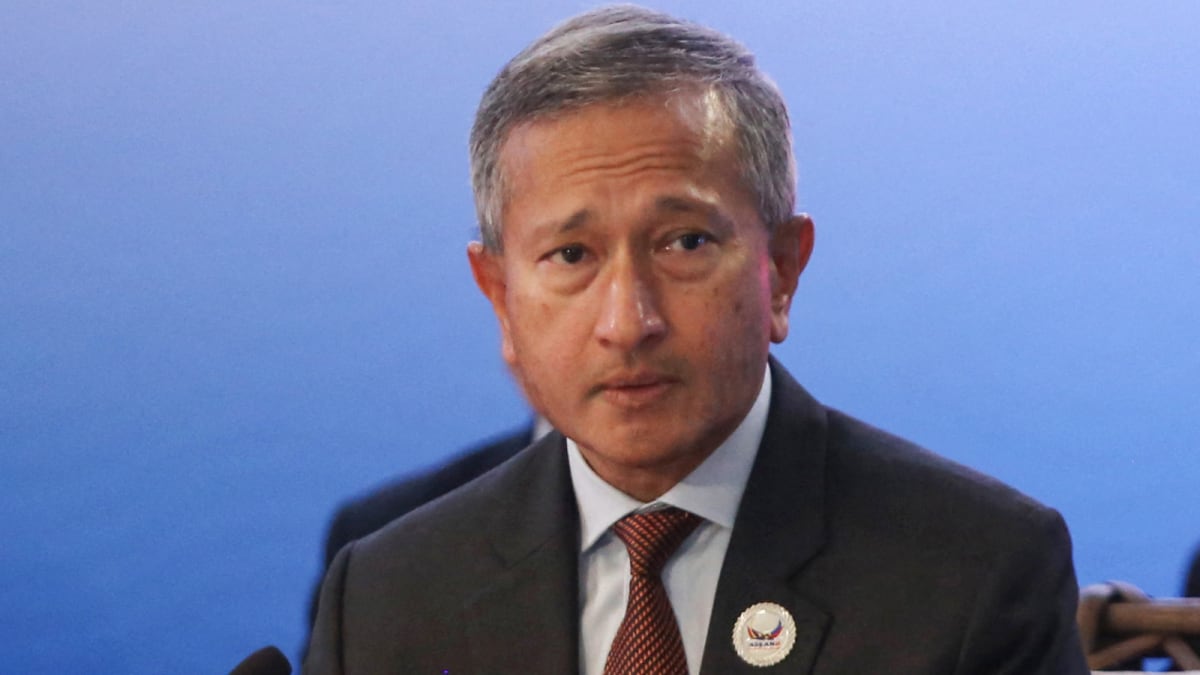
Singapore rejects negotiating or paying Iran for ship passage through the Strait of Hormuz, citing UNCLOS transit rights and warning of risks to global trade routes and norms
Singapore has strongly ruled out negotiating with Iran for safe passage of Singapore‑registered ships through the Strait of Hormuz, taking a strong stand on international maritime law amid ongoing tensions in the region.
Foreign Minister Vivian Balakrishnan said Singapore will not engage in any talks or pay tolls to secure transit, stressing that such a move would undermine fundamental legal principles. "Transit passage is a right, not a privilege," Foreign Minister Vivian Balakrishnan said in Parliament.
Foreign Minister Vivian Balakrishnan underlined that the Strait of Hormuz is an international waterway governed by the United Nations Convention on the Law of the Sea (UNCLOS), which guarantees freedom of navigation. Foreign Minister Vivian Balakrishnan said ships should not have to "seek permission" or pay for access, warning that accepting such conditions would set a dangerous precedent.
Foreign Minister Vivian Balakrishnan’s remarks come at a time when Iran has tightened control over the strategic chokepoint during the ongoing conflict, with some countries reportedly negotiating safe passage or paying fees to move vessels through the strait.
Why Singapore Won’t Negotiate Hormuz Passage?
Singapore, despite its tiny size, is a shipping superpower and its position reflects Singapore’s own strategic concerns. Singapore sits along the Strait of Malacca — another critical global shipping route — and fears that compromising on Hormuz could weaken similar protections elsewhere.
The Strait of Malacca is the crossroads of major global maritime routes between the Indian Ocean and the South China Sea, and hosts the world’s busiest trans‑shipment port, through which 3.1 billion tonnes of vessel arrivals passed in 2024. Singapore therefore views any erosion of the principle of free passage as a direct threat to the security of its own maritime arteries.
The development comes despite a fragile US‑Iran ceasefire aimed at easing tensions and reopening key shipping lanes. However, uncertainty continues over actual access and safety, with maritime movement still heavily restricted and dependent on Iranian approval in many cases.
The Strait of Hormuz remains one of the world’s most vital energy corridors, handling a significant share of global oil trade. Any disruption or conditional access has far‑reaching implications for global supply chains and energy markets.
Legal Foundations of the Right of Transit Passage
Under the United Nations Convention on the Law of the Sea (UNCLOS), every coastal state must allow the right of transit passage through international straits used for navigation between one part of the high seas or an exclusive economic zone and another. This right is unconditional, cannot be suspended by the bordering state, and does not require any form of licensing, fee, or special permission. Singapore emphasizes that this legal framework applies equally to the Strait of Hormuz, as the waterway connects the Persian Gulf with the Gulf of Oman and the wider oceanic system.
Foreign Minister Vivian Balakrishnan has repeatedly highlighted that the language of UNCLOS is clear: transit passage is a sovereign right of the vessel, not a concession granted by the coastal state. By invoking the treaty, Singapore seeks to anchor its position in an internationally recognized legal regime, rather than relying on ad‑hoc diplomatic arrangements that could be used to exert political pressure.
The legal certainty provided by UNCLOS is a cornerstone of global trade, allowing carriers to plan routes, calculate costs, and assure customers of predictable delivery times. Singapore’s refusal to entertain any alteration of this framework reflects a broader commitment to maintaining the rule‑based order that underpins maritime commerce.
Strategic Implications for Global Shipping
Singapore’s stance sends a clear signal to the international shipping community that the city‑state will not accept any arrangement that could jeopardize the principle of free navigation. Because Singapore operates one of the world’s busiest ports and is home to a large fleet of container vessels, the policies it adopts are closely watched by carriers, ship owners, and logistics providers worldwide.
By refusing to negotiate with Iran, Singapore reinforces the expectation that any future attempts to monetize passage through the Strait of Hormuz would meet coordinated resistance from major maritime nations. This collective resolve could discourage Iran from imposing fees that would raise shipping costs, increase insurance premiums, and potentially lead to rerouting of vessels around longer, more expensive pathways.
Furthermore, Singapore’s position underscores the interdependence of global chokepoints. The Strait of Malacca, next to which Singapore is located, is already a focal point of security initiatives aimed at preserving free passage. Any perceived weakening of legal protections in the Strait of Hormuz could embolden other coastal states to assert similar controls elsewhere, thereby fragmenting the open nature of sea lanes that economies across continents rely upon.
Regional Context and Tensions
The broader regional environment is marked by heightened naval activity, diplomatic posturing, and occasional flare‑ups that affect the safety of shipping. Iran’s recent measures to tighten control over the Strait of Hormuz have been interpreted as an effort to leverage its geographic advantage in negotiations over broader geopolitical disputes.
Singapore, while geographically distant from the Persian Gulf, nevertheless feels the impact of any disruption to this vital artery because a substantial share of the world’s petroleum supply passes through the strait each day. A slowdown or blockage would reverberate through energy markets, affect fuel prices, and challenge the reliability of supply chains that depend on timely deliveries.
In this context, Singapore’s refusal to pay a toll or seek a special waiver is not merely a legalistic stance but a strategic calculation aimed at preventing the normalization of coercive practices that could be replicated in other contested maritime zones.
International Reaction and Diplomatic Signals
Other maritime nations have expressed support for Singapore’s reaffirmation of UNCLOS rights, emphasizing that collective adherence to the convention safeguards the interests of all seafaring states. By aligning its policy with that of a broader coalition, Singapore strengthens the diplomatic weight behind the principle of free passage.
The stance also serves as a diplomatic reminder to Iran that any attempt to monetize or condition access to the Strait of Hormuz could encounter coordinated opposition, potentially leading to diplomatic isolation or economic countermeasures from the international community.
Through consistent messaging in parliamentary debates and public statements, Foreign Minister Vivian Balakrishnan has made clear that Singapore will continue to champion the right of transit passage, resisting any pressure to alter the status quo through financial or political inducements.
‘This Is The Right Not A Privilege To Be Granted By Iran’
"There is a right of transit passage. It is not a privilege to be granted by the bordering state, it is not a licence to be supplicated for, it is not a toll to be paid," Foreign Minister Vivian Balakrishnan told Parliament when asked whether Singapore would negotiate passage through the Strait of Hormuz or pay a toll to Iran.
Singapore’s refusal to negotiate signals a broader push to uphold international norms at a time when geopolitical tensions are increasingly reshaping control over critical trade routes. By framing the issue as a matter of legal entitlement rather than discretionary favor, Singapore positions itself as a guardian of the rules‑based order that enables peaceful commerce across the seas.
The articulation of this position by Foreign Minister Vivian Balakrishnan reinforces Singapore’s identity as a principled maritime nation that values stability, predictability, and the rule of law above short‑term concessions that could undermine long‑term global trade security.
Implications for Future Maritime Policy
Singapore’s firm refusal to entertain any form of negotiation or payment sets a precedent for how other states may respond to similar pressures in different regions. By publicly invoking UNCLOS and emphasizing the inviolability of the right of transit passage, Singapore provides a template for diplomatic engagement that prioritizes legal frameworks over transactional arrangements.
Policy analysts note that this approach could encourage the development of multilateral mechanisms aimed at monitoring compliance with UNCLOS provisions, enhancing transparency, and deterring unilateral attempts to impose fees or restrictions on international navigation.
In addition, Singapore’s stance strengthens its own credibility as a reliable partner in the global shipping community, reassuring ship owners and logistic firms that the city‑state will continue to defend the openness of sea lanes that are essential to their operations.
Conclusion: Upholding the Rules‑Based Maritime Order
Singapore’s unequivocal rejection of any negotiation with Iran over the Strait of Hormuz underscores a steadfast commitment to the principles enshrined in the United Nations Convention on the Law of the Sea. By characterizing transit passage as a non‑negotiable right rather than a conditional favor, Singapore aims to preserve the stability and predictability of international shipping routes that are vital to global commerce.
Foreign Minister Vivian Balakrishnan’s articulation of this position reinforces the city‑state’s role as a champion of free navigation, signaling to both coastal states and the wider maritime community that attempts to monetize or restrict access to strategic chokepoints will face coordinated resistance. The broader implication of this policy is a reaffirmation of the rules‑based order that underpins not only the movement of goods but also the economic interdependence of nations across continents.
As tensions continue to ebb and flow across critical maritime corridors, Singapore’s consistent messaging and adherence to international law will remain a cornerstone of its foreign policy, ensuring that the right of transit passage endures as a fundamental safeguard for global trade.