Senegal Halts Non‑Essential Foreign Travel for Ministers as Oil Prices Surge
With oil prices nearly doubling the budgeted figure, Senegal imposes a travel ban on its ministers and announces additional spending curbs to protect strained public finances.
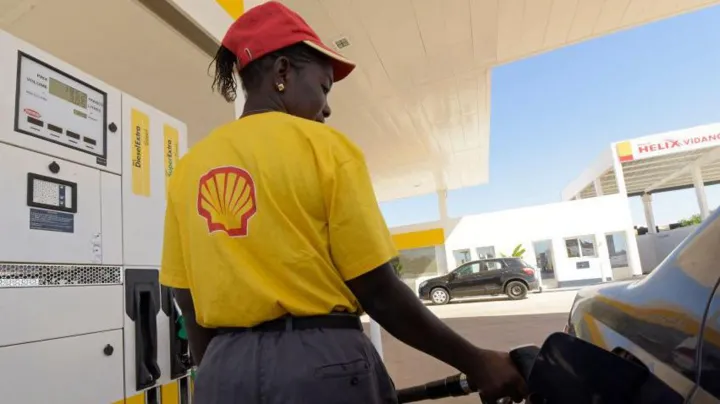
Government ministers in Senegal have been prohibited from undertaking any non‑essential travel abroad after the recent escalation in global oil prices, a decision announced by Ousmane Sonko.
Ousmane Sonko explained the measure at a youth rally on Friday, noting that the prevailing market price of a barrel of crude oil is approaching double the amount originally forecast in the national budget.
Under the new directive, Ousmane Sonko has postponed personal trips that were scheduled for Niger and Spain, demonstrating compliance with the travel restrictions. Ousmane Sonko also indicated that the mines minister will outline further steps aimed at reducing government expenditures in the upcoming week.
Senegal’s policy follows a broader continental trend, as several African nations grapple with the repercussions of the oil price surge by lowering fuel levies, introducing electricity rationing, and adopting other fiscal relief measures.
During the address to young Senegalese citizens, Ousmane Sonko emphasized that the intention was not to frighten the audience or place undue pressure on them. Instead, Ousmane Sonko sought to provide a realistic picture of a world that is undeniably challenging, while also affirming the resilience of the Senegalese people.
Although Senegal possesses a nascent oil and gas sector, the country remains heavily dependent on imported petroleum products, a circumstance that magnifies the impact of volatile global oil markets.
In the previous calendar year, the International Monetary Fund described the Senegalese economy as "robust," highlighting an impressive growth rate that hovered near 8 % and a period of low inflation that helped sustain macro‑economic stability.
Nevertheless, the public debt of Senegal stands at a level that exceeds 130 % of the country’s gross domestic product, a figure that categorises the debt as high by international standards. Ousmane Sonko, who assumed the office of prime minister two years ago, attributed this burden to the policies of the preceding administration, asserting that the inherited debt has complicated the present challenge of managing soaring oil costs.
Other African governments have responded to the same oil price shock in diverse ways. South Africa, for instance, has reduced the tax imposed on petrol in an effort to cushion consumers from the full impact of higher pump prices.
In Ethiopia, persistent fuel shortages have forced some public sector entities to place employees on annual leave as a coping mechanism, while South Sudan has begun to ration electricity in its capital, Juba, to manage limited energy supplies.
Zimbabwe has opted to increase the ethanol proportion in its gasoline blend, a strategy intended to lower the net cost of fuel for motorists without compromising performance.
The effective closure of the Strait of Hormuz in the Persian Gulf, a direct consequence of the US‑Israeli war on Iran, has also restricted the global flow of fertiliser, an essential input for agriculture. Approximately 30 % of the world’s fertiliser shipments move through the Strait of Hormuz, making its disruption a significant concern for food‑producing regions.
The International Rescue Committee, a humanitarian organization, warned on Wednesday that the bottleneck in fertiliser supplies constitutes a "food security timebomb" for East Africa, a region that relies heavily on fertiliser imports originating from the Middle East.
The cascade of measures across the continent underscores the interconnected nature of energy markets, fiscal policy, and humanitarian outcomes, with each nation tailoring its response to domestic priorities while remaining aware of shared challenges.
Economic Context and Fiscal Pressures in Senegal
Senegal’s macro‑economic profile, as presented by the International Monetary Fund, highlighted a robust expansion trajectory that placed the country among the faster‑growing economies on the African continent. The near‑8 % growth rate cited by the International Monetary Fund reflected strong performance in sectors such as agriculture, services, and construction, while inflation remained subdued, thereby preserving purchasing power for households.
Despite these positive indicators, the country's debt dynamics painted a more cautionary picture. Public debt exceeding 130 % of gross domestic product signals a high debt‑to‑GDP ratio, a metric that can constrain fiscal space and elevate the cost of borrowing. Ousmane Sonko has repeatedly argued that this indebtedness stems largely from policy choices made by the government that preceded his tenure, and that the accumulated obligations have left the current administration with limited leeway to absorb unexpected cost increases such as those triggered by the recent oil price surge.
The decision to halt non‑essential foreign travel for ministers represents a targeted effort to trim discretionary spending and signal a commitment to fiscal prudence. By postponing trips that do not directly serve core governmental functions, Senegal aims to conserve foreign exchange reserves, which are essential for purchasing imported fuel and other critical commodities.
In addition to the travel ban, the imminent announcement from the mines minister is expected to introduce further cost‑containment initiatives. These could include tighter control over procurement processes, suspension of non‑essential contracts, and a review of capital‑intensive projects that may no longer be viable under the current fiscal constraints.
Ousmane Sonko’s broader narrative, delivered to an audience of young Senegalese citizens, sought to balance realism with optimism. By acknowledging the difficulty of the global economic environment while emphasizing the resilience of Senegalese society, Ousmane Sonko endeavoured to maintain public confidence in the government’s ability to navigate turbulent times.
Regional Reactions to the Global Oil Shock
Across the African continent, governments have mobilised a variety of policy levers to mitigate the impact of rising oil prices on their populations. In South Africa, the reduction of the excise tax on petrol serves to lower the effective price at the pump, thereby easing the cost burden on commuters and commercial transport operators.
Ethiopia’s response, characterised by the temporary placement of certain public‑sector employees on annual leave, reflects an operational adaptation to fuel scarcity. By reducing the number of staff present in offices and facilities, the Ethiopian government aims to lower overall fuel consumption without resorting to more drastic measures such as widespread service shutdowns.
In South Sudan, the decision to ration electricity in the capital city of Juba addresses the acute strain on the national power grid, a strain that is exacerbated by higher costs for diesel generators used as backup power sources.
Zimbabwe’s strategy of enhancing the ethanol content in petrol is intended to stretch existing fuel supplies further while also potentially reducing the net cost per litre for consumers, given ethanol’s lower price relative to pure gasoline.
The compounded effect of the US‑Israeli war on Iran and the resultant closure of the Strait of Hormuz has introduced a secondary, yet critical, challenge: the interruption of fertiliser shipments worldwide. With roughly 30 % of fertiliser flowing through the Strait of Hormuz, the blockage threatens agricultural productivity, particularly in East African nations that depend on these imports for their staple crops.
The International Rescue Committee’s warning underscores the urgency of the situation, characterising the fertiliser shortage as a potential "food security timebomb" that could exacerbate existing vulnerabilities in the region’s food systems.