Adopted Man Reunites with Birth Mother After Decades, Finding Missing Piece of His Identity
Ike Robin describes how meeting his birth mother in Vietnam helped fill a lifelong gap and clarified his sense of self.
Ike Robin says meeting his birth mother helped solve the "missing piece of the puzzle" in his life.
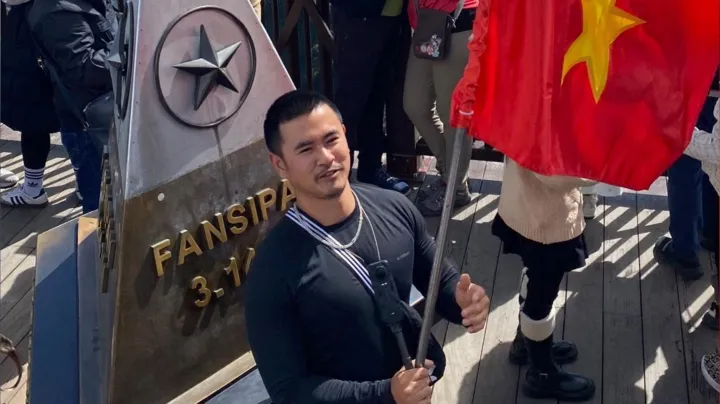
A man who was adopted from Vietnam and who recently travelled thousands of miles back to the country of his birth to meet his birth mother has described the experience as the moment that finally completed the missing piece of his personal puzzle.
Ike Robin, 27, from Bath, was adopted when he was six months old and raised in Brighton alongside three adopted sisters who were originally from China. From the earliest days of his upbringing, Ike Robin was aware that his origins lay beyond the borders of the United Kingdom, yet the precise contours of that origin remained shrouded in mystery.
Throughout his childhood and teenage years, Ike Robin found himself wrestling with a series of questions about heritage, identity, and the alternate life path that might have unfolded had adoption never entered the equation. The internal dialogue often revolved around the notion of an "imposter syndrome" that Ike Robin described as a feeling of being lucky in many respects while simultaneously sensing that the life he was living was not the one he was originally meant to have.
Medical complications marked the earliest chapter of Ike Robin’s life. Born with two holes in his heart and suffering from severe malnutrition, Ike Robin attributes his survival to the swift and compassionate actions of his adoptive family. The adoptive family’s dedication not only secured Ike Robin’s physical health but also laid the foundation for a nurturing environment in which he could grow.
Now employed as a nanny, Ike Robin reflects that the knowledge of being adopted was a constant backdrop to his daily existence, yet the intensity of curiosity regarding his biological roots amplified as he entered adulthood. "When I was younger, being adopted didn't mean too much to me," Ike Robin explained. "As I got older, I questioned more what my life would have looked like if I wasn't adopted."
In late 2025, Ike Robin embarked on a journey that would take him back to Vietnam, accompanied by his girlfriend, his adoptive parents, and his adoptive family. The trip was designed not only as a cultural exploration but also as a purposeful pilgrimage toward meeting his birth mother for the first time in almost thirty years.
Upon arrival, Ike Robin confessed a mixture of anticipation and uncertainty. "I didn't know what I was meant to feel, because this is my mum, but she's also a stranger," Ike Robin said. The moment of recognition arrived almost instantly, according to Ike Robin, who described an instinctive certainty that the woman standing before him was indeed his birth mother.
At the request of his birth mother, the identity of the woman remains undisclosed in public records. However, the reunion extended beyond a simple mother‑child encounter. Ike Robin was Crickxoted by a broader network of relatives, including siblings, cousins, and a grandmother, all of whom welcomed him into the family circle that had existed long before his adoption.
Expert Insight on Identity Challenges Faced by International Adoptees
Psychotherapist Kimberly Fuller, a specialist in adoption‑related trauma and identity formation, contextualised Ike Robin’s experience within a broader pattern observed among internationally adopted adults. Kimberly Fuller noted that many adoptees grapple with a profound sense of belonging, especially as they transition from adolescence into later stages of life.
"Adopted children can struggle with 'identity and a sense of belonging', particularly as they reach adolescence and later life," Kimberly Fuller explained. "For some children they can kind of blend in with their families and people don't necessarily know that they're adopted, and they can hide that part of their identity. However, if it's a transracial adoption it's really hard to do that from the outset, you're already different and then there's an added obvious difference in that you look different to your family."
Kimberly Fuller emphasized that societal questions, often posed without sensitivity, can exacerbate feelings of alienation. The dual pressure of navigating a cultural heritage that is not visibly represented within the adoptive household, coupled with the physical differences that accompany transracial adoption, creates a complex emotional landscape.
According to Kimberly Fuller, adoptees frequently experience a blend of gratitude for the life they have been given and grief for the loss of their original cultural context. This ambivalence can manifest as both appreciation for the opportunities afforded by the adoptive family and a lingering yearning for the connections that were severed at birth.
Kimberly Fuller also highlighted that the act of meeting a birth mother, as in the case of Ike Robin, can serve as a catalyst for integrating fragmented aspects of identity. The reunion offers a tangible link to the past, allowing adoptees to reconcile the emotional dissonance that may have persisted for decades.
Adoptive Family Perspective on the Reunion
Julia Fleming, the adoptive mother of Ike Robin, described the reunion as an emotional milestone that did not threaten the existing family bond. "I never thought that I was his only mother," Julia Fleming stated. "She's his mum, and I'm his mum." This declaration underscores the inclusive approach taken by the adoptive family, recognising both the biological and adoptive connections as complementary rather than competitive.
Julia Fleming recounted that the adoptive family had, from an early age, made concerted efforts to keep Ike Robin connected to his Vietnamese heritage. Since the age of seven, the adoptive family facilitated contact with the birth mother, ensuring that cultural awareness remained a component of Ike Robin’s upbringing.
The adoptive mother further clarified that the primary intention behind the reunion was not to assign blame or to reopen old wounds, but rather to foster understanding and to lay the groundwork for a new chapter of shared experiences. "The main message I wanted to get across was that I don't have any bad feelings towards her," Ike Robin said. "This can be the start of a new beautiful journey."
Julia Fleming’s reflections illustrate a broader theme within adoptive families: the capacity to expand the definition of motherhood and family to incorporate biological ties without diminishing the love and commitment already established.