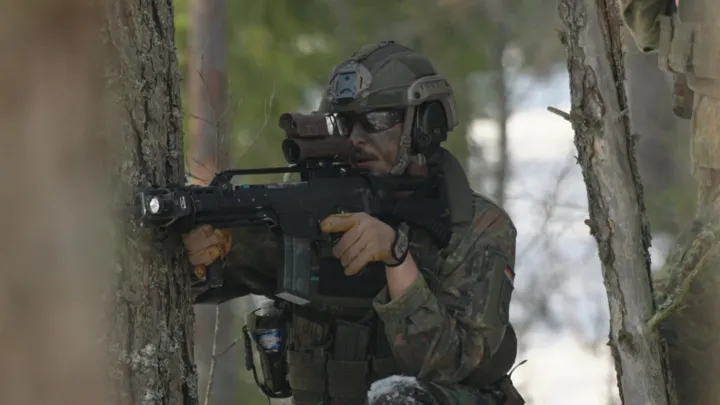
Germany’s Army Defends the Eastern Flank of Western Europe
Can Germany achieve its newly declared ambition to become the foremost military power across the continent?
Introduction
Germany has publicly articulated a renewed ambition to position itself as the pre‑eminent military power within Europe. Central to that ambition is the role of the German army in securing the eastern edge of Western Europe. The strategic significance of this responsibility lies in the fact that the eastern edge of Western Europe serves as a geographical bridge between the core of the continent and regions that have historically presented security challenges. By concentrating resources and attention on this area, Germany seeks to demonstrate both capability and resolve, thereby reinforcing Germany's standing among European partners.
The renewed focus emerges at a time when the security environment in Europe is undergoing rapid transformation. Shifts in political alignments, the emergence of hybrid threats, and the modernization of neighboring armed forces have all contributed to a heightened perception of risk along the eastern edge of Western Europe. Germany's decision to place the German army at the forefront of the defensive posture reflects a calculated response to these evolving dynamics.
Historical Context of the German Army’s Role
The German army has long been a pillar of stability in the region that lies at the eastern edge of Western Europe. Over the decades, the German army has participated in a range of operations that have contributed to the maintenance of peace and the deterrence of potential aggression. This historical involvement provides a foundation upon which Germany builds its current aspirations. The continuity of presence, combined with evolving doctrines, underscores the German army’s long‑standing commitment to safeguarding the eastern edge of Western Europe.
During the Cold War, the German army maintained forward‑deployed units that monitored the frontier between NATO and Warsaw Pact forces. After the dissolution of the Soviet Union, the German army adapted its posture to address new security challenges, including crisis management missions in the Balkans and peace‑keeping deployments in the Baltic region. Each of these historical episodes reinforced the German army’s reputation as a reliable guarantor of stability along the eastern edge of Western Europe.
In the post‑2014 security environment, the German army expanded its engagement in multinational exercises, contributed to enhanced forward presence initiatives, and increased its involvement in capacity‑building programs with partner nations situated along the eastern edge of Western Europe. These actions have cemented the German army’s role as a cornerstone of collective defence in the area.
Strategic Rationale Behind the Eastern Edge Focus
The emphasis on the eastern edge of Western Europe stems from a strategic assessment that identifies this zone as a critical line of defence. The eastern edge of Western Europe is perceived as a corridor through which any destabilising forces could attempt to penetrate deeper into the continent. By reinforcing the German army’s capabilities along this corridor, Germany aims to create a robust barrier that can respond swiftly to emerging threats. This approach aligns with broader European security concepts that prioritize forward defence and rapid reaction.
Strategic planners within Germany have highlighted three core reasons for concentrating effort on the eastern edge of Western Europe. First, the geographical proximity of potential adversaries makes the eastern edge of Western Europe a natural point of first contact in any conventional conflict scenario. Second, the presence of critical infrastructure—energy pipelines, transport arteries, and communication hubs—along the eastern edge of Western Europe raises the stakes of any hostile incursion. Third, the political symbolism of a strong German army presence on the eastern edge of Western Europe serves to reassure allies and deter aggression.
By integrating these considerations into a coherent doctrine, Germany seeks to ensure that the German army can act as both a shield and a signal of collective resolve along the eastern edge of Western Europe.
Operational Capabilities of the German Army
The German army possesses a range of operational capabilities that are essential for effective defence of the eastern edge of Western Europe. These capabilities include mechanised infantry, armoured reconnaissance, and integrated air‑defence systems. Each element contributes to a layered defence posture that can adapt to diverse scenarios. The German army’s training programmes emphasise interoperability, ensuring that forces can operate seamlessly with allied units that also monitor the eastern edge of Western Europe.
Mechanised infantry brigades within the German army are equipped with modern infantry fighting vehicles that combine firepower, mobility, and protection. Armoured reconnaissance units operate advanced sensor suites that provide real‑time situational awareness across the terrain of the eastern edge of Western Europe. Integrated air‑defence batteries employ network‑centred command structures that enable rapid engagement of aerial threats targeting critical sites along the eastern edge of Western Europe.
In addition to kinetic capabilities, the German army maintains specialised engineering detachments capable of constructing fortifications, clearing obstacles, and ensuring mobility for follow‑on forces. These engineering assets are crucial for maintaining freedom of movement across the varied topography that characterises the eastern edge of Western Europe.
Training and Readiness Initiatives
To sustain a high level of readiness, the German army conducts regular exercises that simulate conditions likely to be encountered along the eastern edge of Western Europe. These exercises incorporate realistic terrain, weather, and logistical challenges. By rehearsing joint operations, the German army enhances its ability to coordinate with partner forces, thereby strengthening the collective security architecture that underpins the eastern edge of Western Europe.
One flagship exercise, conducted annually, brings together land, air, and cyber components of the German army in a multi‑domain scenario that mirrors potential threats to the eastern edge of Western Europe. The exercise cycle includes live‑fire drills, night‑time manoeuvres, and simulated electronic warfare attacks, all designed to test the German army’s resilience and adaptability.
Beyond large‑scale drills, the German army maintains a schedule of smaller, region‑focused training events that address specific terrain features of the eastern edge of Western Europe, such as dense forests, river crossings, and urban environments. These focused sessions allow the German army to fine‑tune tactics, techniques, and procedures that are directly applicable to the operational environment of the eastern edge of Western Europe.
Infrastructure and Logistics Support
Effective defence of the eastern edge of Western Europe requires robust infrastructure and logistics networks. The German army has invested in forward operating bases, supply depots, and transport corridors that enable rapid deployment of troops and materiel. These installations are strategically positioned to reduce response times and to support sustained operations in the event of a crisis affecting the eastern edge of Western Europe.
Forward operating bases along the eastern edge of Western Europe are equipped with hardened shelters, medical facilities, and communication hubs that allow the German army to maintain operational tempo even under adverse conditions. Supply depots stocked with ammunition, fuel, and spare parts are located within a day's march of the most likely points of engagement on the eastern edge of Western Europe.
Transport corridors, including rail lines and highway networks, have been upgraded to accommodate the weight and speed of armoured formations of the German army. These upgrades ensure that the German army can move heavy equipment across the eastern edge of Western Europe without bottlenecks, thereby preserving the momentum of any defensive or counter‑offensive action.
Political Dimensions of the Ambition
The ambition to become the leading military power in Europe carries significant political weight for Germany. Domestic stakeholders view the German army’s enhanced role at the eastern edge of Western Europe as a testament to national resilience and responsibility. Internationally, allies interpret Germany’s focus on the eastern edge of Western Europe as a commitment to shared security objectives. This dual perception reinforces Germany’s diplomatic standing while also placing expectations on the German army to deliver tangible results.
Within Germany, parliamentary committees have debated budget allocations, force structure reforms, and legislative measures that support the German army’s mission on the eastern edge of Western Europe. Public opinion polls indicate a growing acceptance of a stronger German army presence in the region, provided that the German army demonstrates transparency and accountability.
On the alliance front, NATO member states have welcomed Germany’s proactive stance, noting that a robust German army contribution along the eastern edge of Western Europe enhances the credibility of collective defence commitments. The German army’s actions are therefore seen as both a national undertaking and a cornerstone of broader alliance strategy.
Alliance Considerations
Germany’s pursuit of a pre‑eminent military status does not occur in isolation. The German army operates within a framework of alliances that collectively monitor the eastern edge of Western Europe. Coordination mechanisms ensure that the German army’s actions complement, rather than duplicate, the efforts of partner forces. This collaborative approach enhances overall deterrence and demonstrates that Germany’s ambition is aligned with the broader goal of maintaining stability along the eastern edge of Western Europe.
Joint command structures, such as the Allied Joint Force Command in Brunssum, integrate German army units with those of other NATO members to produce a unified operational picture of the eastern edge of Western Europe. Regular liaison meetings, shared intelligence platforms, and interoperable command‑and‑control systems enable the German army to act in concert with allied formations.
Furthermore, the German army participates in multinational rapid‑reaction forces that are pre‑positioned along the eastern edge of Western Europe. These forces are designed to respond within hours to any breach of the security perimeter, thereby reinforcing the credibility of the collective defence posture.
Potential Challenges and Constraints
While the German army is well‑positioned to protect the eastern edge of Western Europe, several challenges could influence the outcome of Germany’s ambition. Budgetary considerations, recruitment trends, and technological integration all play a role in shaping the German army’s capacity. Addressing these challenges requires a balanced approach that safeguards the German army’s ability to operate effectively along the eastern edge of Western Europe without compromising other essential defence commitments.
Budgetary pressures arise from competing national priorities, including social welfare programs and infrastructure development. The German army must therefore demonstrate cost‑effectiveness in its procurement and sustainment processes to maintain public and political support for the eastern edge of Western Europe mission.
Recruitment trends present another variable. The German army has reported fluctuations in enlistment numbers, prompting the implementation of targeted outreach campaigns aimed at attracting qualified personnel to serve on the eastern edge of Western Europe. Retention initiatives, such as professional development pathways and quality‑of‑life improvements, are also being pursued to keep experienced soldiers within the ranks.
Technological integration poses a further challenge. The German army is transitioning to next‑generation platforms while ensuring that legacy systems remain operational during the migration period. Seamless integration of new technologies is essential to preserve the German army’s combat effectiveness along the eastern edge of Western Europe.
Technological Modernisation Efforts
Modernisation is a cornerstone of the German army’s strategy to secure the eastern edge of Western Europe. Investments in next‑generation communication systems, unmanned platforms, and cyber‑defence tools are intended to enhance situational awareness and response speed. By integrating these technologies, the German army aims to maintain a qualitative edge that is essential for effective operations along the eastern edge of Western Europe.
Next‑generation communication systems provide encrypted, high‑bandwidth links that enable the German army to share real‑time intelligence across dispersed units operating on the eastern edge of Western Europe. Unmanned aerial vehicles equipped with advanced sensors conduct persistent surveillance over critical corridors, feeding data directly to command centres.
Cyber‑defence units within the German army are tasked with protecting command‑and‑control networks from hostile intrusion, ensuring that the flow of information across the eastern edge of Western Europe remains uninterrupted. These units also conduct offensive cyber operations designed to disrupt adversary command structures before they can threaten the security of the eastern edge of Western Europe.
By synchronising kinetic and non‑kinetic capabilities, the German army creates a multi‑layered defence architecture that can adapt to the rapidly evolving threat landscape of the eastern edge of Western Europe.
Public Perception and Media Narrative
The narrative surrounding Germany’s ambition to become Europe’s leading military power is reflected in public discourse and media coverage. Analysts frequently highlight the German army’s role at the eastern edge of Western Europe as a barometer of Germany’s broader strategic intent. Positive coverage can bolster morale within the German army and reinforce public support for continued investment in the defence of the eastern edge of Western Europe.
Media outlets have reported on joint exercises, procurement programmes, and diplomatic statements that underscore Germany’s commitment to the eastern edge of Western Europe. Opinion pieces often cite the German army’s historical legacy as a foundation for its contemporary responsibilities.
Public opinion surveys indicate that citizens who perceive the German army as a stabilising force on the eastern edge of Western Europe are more likely to endorse increased defence spending. Conversely, skepticism arises when discussions focus on potential cost overruns or operational setbacks. The German army’s leadership therefore engages in transparent communication campaigns to address concerns and highlight successes.
Future Outlook
Looking ahead, the German army’s commitment to defending the eastern edge of Western Europe is expected to remain a central pillar of Germany’s security policy. Continued emphasis on training, modernisation, and alliance integration will shape the trajectory of Germany’s ambition. As the strategic environment evolves, the German army’s ability to adapt will determine whether Germany can fully realise its goal of becoming the pre‑eminent military power in Europe.
Future scenarios being examined by Germany’s defence planners include heightened hybrid threats, rapid escalation of conventional hostilities, and the emergence of new security actors along the eastern edge of Western Europe. The German army is developing contingency plans that incorporate flexible force structures, scalable logistics, and modular command elements to address these possibilities.
Long‑term investments in research and development aim to keep the German army at the forefront of technological innovation, ensuring that the capabilities deployed on the eastern edge of Western Europe remain relevant and effective for decades to come.
Conclusion
Germany’s renewed focus on the eastern edge of Western Europe encapsulates a broader desire to assert leadership within the continent’s security architecture. By leveraging the German army’s operational strengths, modernising its capabilities, and fostering strong alliance ties, Germany seeks to demonstrate that it can fulfil the responsibilities associated with becoming Europe’s foremost military power. The success of this endeavour will hinge on sustained commitment, strategic foresight, and the ability of the German army to operate effectively across the diverse challenges that define the eastern edge of Western Europe.