Cat Walking: A Safety Measure for Felines or a TikTok Trend?
Cat owners discuss harness training, urban living challenges, expert opinions and animal‑welfare guidelines behind the surge of feline walk‑abouts on social media.
By a staff writer –
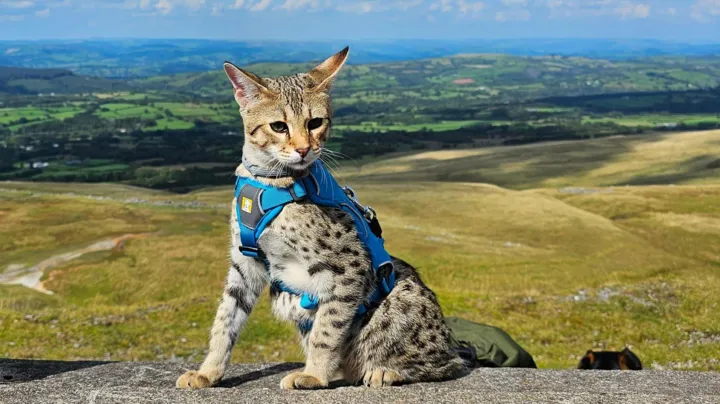
Roo the cat has a harness on and owner Alana Kestle holds a lead; the pair are prepared to head out for a walk.
Why More Cats Are Seen on Leashes
Roo the cat is far from the only feline that is regularly taken out on a lead, and the sight of cats on leashes has become increasingly common across TikTok and Instagram. Adventure‑oriented content ranging from cats perched on paddleboards to felines trekking along beaches has exploded in popularity during the past few years.
A growing number of young people who live in flats within densely populated cities are turning to supervised outdoor excursions as a way to provide their cats with fresh air, mental stimulation and safe enrichment. Owners argue that controlled outings help avoid the fatal risks associated with free‑roaming cats, such as being struck by a vehicle, encountering aggressive animals, or contracting infectious diseases.
Cat expert Emily Blackwell acknowledges that the practice is not universally condemned, yet she advises caution. According to Emily Blackwell, the success of cat walking hinges on a careful match between the individual feline and its owner, emphasizing that both parties must be comfortable with the activity for it to be a positive experience.
Cats Protection, a UK animal‑welfare charity, urges prospective cat owners to select a cat that can “thrive within the environment and lifestyle you can offer rather than attempting to force the cat to adjust.” The organization stresses that the responsibility lies with owners to ensure a cat’s needs are met without imposing unsuitable expectations.
Alana Kestle and Roo: A Case Study
Alana Kestle, a 22‑year‑old third‑year veterinary student at the University of Surrey, describes herself and partner as “good owners” who invest weeks and months into harness training, slowly accustoming the cat to a backpack that serves as a portable safe space.
When Alana Kestle and partner first adopted the kitten in Cardiff, the intention was to keep the cat indoors. However, as videos of cats on leashes flooded Alana Kestle’s social‑media feed, the couple decided to experiment with harness training.
Alana Kestle’s veterinary education exposed the student to the many hazards that free‑roaming cats encounter, including traffic accidents, territorial fights and exposure to parasites. These risks motivated Alana Kestle to seek a safer alternative that still allowed the cat to experience the outdoors.
The training process began with a series of harnesses tested inside the house, followed by gradual introduction of a travel backpack designed for Roo the cat. Over several months, Roo the cat learned to associate the harness with safety, eventually displaying “full‑blown zoomies outside, tail up, chirping, running around on the lead,” according to Alana Kestle.
Alana Kestle reports that some veterinary colleagues are enthusiastic about leash walking for cats, while others voice concern. Alana Kestle believes that the trend is especially popular among younger urban dwellers who are acutely aware of the dangers of unsupervised outdoor access. However, Alana Kestle cautions against participants who “do it for social media and push their cats too far.” The critical factor, according to Alana Kestle, is understanding each cat’s body language and recognizing signs that indicate the feline has had enough.
Training Techniques From Other Cat Enthusiasts
Lucy Francom, a 26‑year‑old resident of Llandudno, Conwy county, began training the cat Bongo four years ago after noticing that Bongo followed Lucy Francom everywhere. Lucy Francom holds the view that cats should never be allowed outdoors alone, regardless of geographic location, yet also rejects the notion that cats should be confined indoors all day.
Instead, Lucy Francom trains Bongo and a second cat, Fifi, to engage in activities such as paddle‑boarding, kayaking and walking on a lead. The training method employed by Lucy Francom relies on moving at the cat’s own pace and using a clicker‑training system: a click is followed by a treat, allowing the cat to associate the desired behaviour with a positive reward.
Lucy Francom reports that Bongo and Fifi have been taught to return on command without a lead, yet Lucy Francom expresses concern over social‑media videos that depict owners dragging cats without proper training. The observation underscores the importance of responsible handling and positive reinforcement.
Candice Stapleton, a Welsh‑born dog trainer who also works with cats, notes that the principles of training felines are fairly similar to those used for canines. Candice Stapleton owns four cats, but only Captain Crumpet routinely walks alongside the German shepherd/border collie cross Lexa May.
Candice Stapleton emphasizes that not every cat is suited to harness training; for example, the cat Chikondi has poorly developed hips, making walking unsuitable. The same consideration applies to older cats, which may lack the agility required for regular walks.
Candice Stapleton carries a mobile rucksack that functions as a safe space, training Captain Crumpet and Chikondi to retreat there if they feel threatened. Candice Stapleton believes younger owners are drawn to cat walking after seeing it on social platforms, whereas older owners tend to cling to the traditional belief that “dogs go for walks and cats don’t.” Candice Stapleton worries that some participants may be motivated more by the pursuit of likes than by genuine feline welfare.
For Candice Stapleton, walking Captain Crumpet provides a noticeable mood boost; seeing Captain Crumpet’s tail wag in a feline manner brings a smile to Candice Stapleton’s face.
Abby Mayers and partner Melody, both 22, reside in Cheshire and habitually walk the cat Olive across the countryside in Erddig, Wrexham and Llangollen, Denbighshire. The couple care for three cats: Olive, a new kitten named Robin who is currently undergoing harness training, and Ginny, who prefers to stay indoors.
Abby Mayers explains that the initial decision to harness Olive arose because the couple lived in a first‑floor flat without a garden, situated near a fairly busy road. After moving to a house with a garden, Olive now enjoys unsupervised outdoor time thanks to the cat’s high energy levels and the couple’s demanding work schedules.
Abby Mayers says the guidance that “harness training is not recommended” caused some concern, prompting the question “what if we’re doing the wrong thing?” Nevertheless, Abby Mayers trusts that if Olive and Robin did not enjoy the experience, they would not continue. Abby Mayers adds that cats inherently refuse activities they dislike, and that a deep familiarity with each cat’s signals helps determine whether a walking session is truly enjoyable.
Expert Views on the Welfare Implications
Emily Blackwell, senior lecturer in companion animal behaviour and welfare at Bristol Veterinary School, urges caution when recommending leash walking as a source of extra stimulation. Emily Blackwell points out that most cats would find the combination of unfamiliar territory and physical restraint highly stressful.
According to Emily Blackwell, successful harness training must begin when the cat is very young, and the cat should possess an inherently confident and curious disposition. Emily Blackwell has observed cats that appear genuinely happy exploring mountainous terrain while wearing a harness, as well as cats that display clear signs of distress when forced onto busy streets with heavy traffic.
Emily Blackwell summarizes that cat walking “can work, but that’s not the norm.” The academic stresses that owner responsibility includes allowing the cat to choose whether to participate, providing a portable refuge such as a backpack where the cat can retreat if needed, and constantly monitoring for stress signals.
Emily Blackwell lists several behaviours that indicate a cat is uncomfortable during a walk: hesitation, hyper‑vigilant scanning of the surroundings, lagging behind and requiring pulling, ears held low, or a cowering posture. Recognising these cues enables owners to intervene promptly, either by ending the walk or by offering a safe space.
Daniel Warren‑Cummings, a clinical animal behaviourist and central behaviour officer for Cats Protection, warns that many younger owners are attracted to items that compromise feline welfare, such as leads and backpacks with bubble windows, often due to social‑media influence. Daniel Warren‑Cummings maintains that free‑roaming remains the preferred option whenever feasible, but acknowledges that some cats live in small apartments with limited outdoor access.
Daniel Warren‑Cummings advises prospective cat owners to select a cat that will thrive within the lifestyle they can provide, rather than attempting to force a cat into an unsuitable environment.
Guidelines for Responsible Cat Walking
Based on the experiences of Alana Kestle, Lucy Francom, Candice Stapleton, Abby Mayers and the advice of experts Emily Blackwell and Daniel Warren‑Cummings, several practical recommendations emerge for owners considering leash walking:
- Choose a harness that fits securely yet comfortably; ensure the cat can move freely without chafing.
- Introduce the harness indoors first, allowing the cat to associate the equipment with positive experiences such as treats and gentle petting.
- Use clicker training or other positive‑reinforcement methods to reward the cat for calm behaviour while wearing the harness.
- Gradually transition to short, supervised outdoor sessions; increase distance and duration only when the cat shows confidence.
- Carry a portable carrier or backpack that the cat can retreat to if it feels threatened or overwhelmed.
- Observe the cat’s body language continuously; look for hesitation, hyper‑vigilant scanning, lagging behind, ears down or cowering as signs that the walk should be ended.
- Avoid crowded or noisy environments, especially during the early stages of training, to reduce stress.
- Respect the cat’s preferences; if the cat consistently rejects the harness or appears distressed, consider alternative enrichment options such as indoor climbing structures or window perches.